




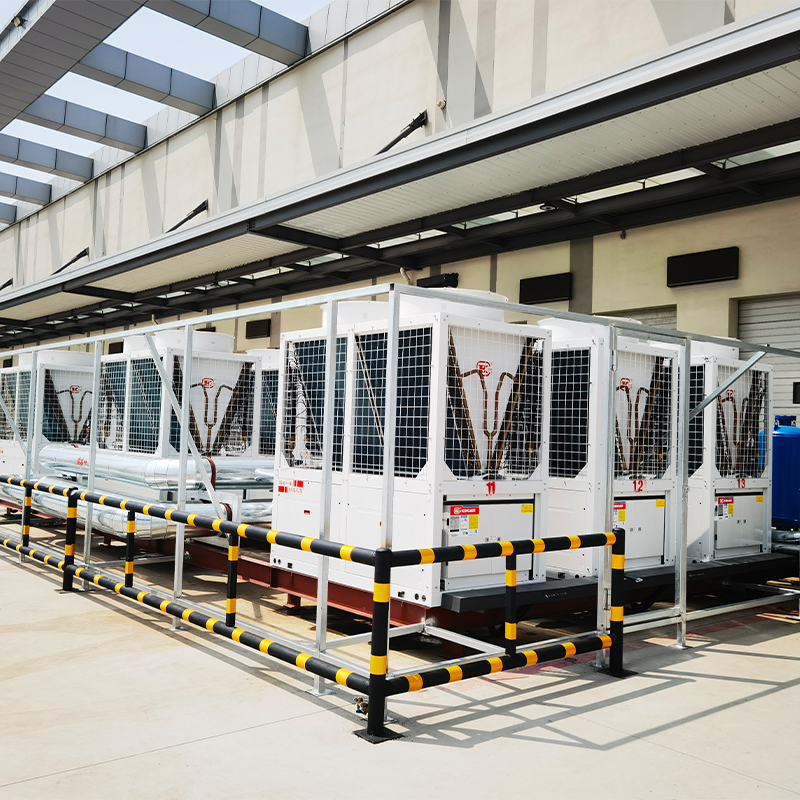
Air Conditioner
Construction location:
Construction scale:Total construction area (square meters), designed storage capacity (tons)
Air conditioning type:□ New construction □ Expansion □ Renovation
Design basisGB 50072-2021 "Design Standard for Cold Storage" and current relevant national standards and specifications
Scope:Architecture and structure, refrigeration system, electrical system, water supply and drainage and fire protection, HVAC and ground antifreeze, automatic control system, etc.


Explanation Section
1. Project Overview
Project name, location, building type, building area, floor height, building orientation, thermal parameters of enclosure structure, process production characteristics, heating equipment, personnel density, working hours, etc
2. Design Basis
GB 50019-2015 "Design Code for Heating, Ventilation and Air Conditioning of Industrial Buildings" (core basis)
GB 50736-2012 "Design Code for Heating, Ventilation and Air Conditioning of Civil Buildings" (relevant provisions)
GB 50016 "Code for Fire Protection Design of Buildings" (Fire Protection Requirements)
GB 50189 "Design Standard for Energy Efficiency of Public Buildings" (Energy Efficiency Requirements)
Other relevant national and local standards
Equipment heat generation and ventilation requirements provided by the process profession
3. Design Parameters
Indoor and outdoor calculation parameters:
Outdoor meteorological parameters (according to specifications or local meteorological data)
Indoor design parameters (temperature, relative humidity, fresh air volume, cleanliness, etc., determined according to process requirements)
Personnel density, lighting power, equipment heat generation, etc
4. Air Conditioning System Scheme
System form selection (all air system, fan coil+fresh air, multi split, etc.)
Cold and heat source solutions (chillers, air-cooled heat pumps, multi split units, etc.)
Airflow organization design (supply air mode, return air mode, air outlet selection)
System zoning principle (zoning according to process zoning and temperature and humidity requirements)
5. Load Calculation
Cooling load calculation (enclosure structure, personnel, equipment, lighting, fresh air, etc.)
Heat load calculation (winter)
Wet load calculation (if necessary)
The calculation sheet should include the calculation process and the basis for parameter values
Calculation Sheet Section (Core Calculation Content)
1. Cooling and Heating Load Calculation Sheet
Hourly cooling load calculation (summer)
Heat load calculation (winter)
Adopt calculation methods recommended by standards (such as harmonic response method, cooling load coefficient method, etc.)
Summary Table of Calculation Results
2. Hydraulic Calculation Sheet
Wind system resistance calculation (most unfavorable loop)
Calculation of water system resistance (chilled water system, cooling water system)
Equipment selection calculation (pump head, fan total pressure)
3. Equipment Selection Calculation
Selection of air conditioning units/fan coil units
Capacity determination of chiller/heat pump units
Selection of equipment such as water pumps, cooling towers, and fresh air units
Safety factor required by regulations
Drawing Section (to be Drawn According to Drawing Standards)
1. Air Conditioning System Plan
Duct layout and air outlet positioning
Duct dimension annotation, elevation
Equipment positioning size
2. Plan of Air Conditioning Water System
Water pipe direction and diameter labeling
Valve and instrument positions
Detailed drawing of equipment takeover
3. System Schematic Diagram
Process diagram of cold and heat source system
Schematic diagram of air conditioning water system
Control Schematic Diagram
4. Sectional Drawing, Detailed Drawing
Detailed drawing of complex nodes
Equipment Installation Details
Detailed drawing of pipeline passing through walls and floors
Equipment and Materials List
1. Main Equipment List
|
serial number |
Device Name |
Specification Model |
unit |
quantity |
remark |
|
1 |
chiller |
XXX kW |
Taiwan |
X |
refrigeration capacity |
|
2 |
air conditioning unit |
XXX m³/h |
Taiwan |
X |
air volume |
|
3 |
water pump |
XXX m³/h |
Taiwan |
X |
Flow head |
|
... |
... |
... |
... |
... |
... |
2. Material List
Duct material, thickness, insulation material
Water pipe material, diameter, insulation material
Valves, accessories, air vents, etc
Special Article on Energy Conservation and Environmental Protection
1. Energy Saving Measures
System Energy Efficiency Ratio (EER/COP) Requirements
Energy saving technologies such as frequency conversion control and heat recovery
Insulation thickness and material selection
2. Environmental Requirements
Noise control (according to Chapter 10 of the specifications)
Vibration reduction measures
Environmental requirements for refrigerants
Construction Instructions and Technical Requirements
1. Construction Requirements
Pipeline installation requirements (slope, support spacing, etc.)
Equipment installation requirements (foundation, vibration reduction, etc.)
Insulation construction requirements
2. Debugging and Acceptance
System debugging requirements (air volume balance, water temperature regulation)
Acceptance criteria (according to GB 50243 "Code for Acceptance of Construction Quality of Ventilation and Air Conditioning Engineering")