




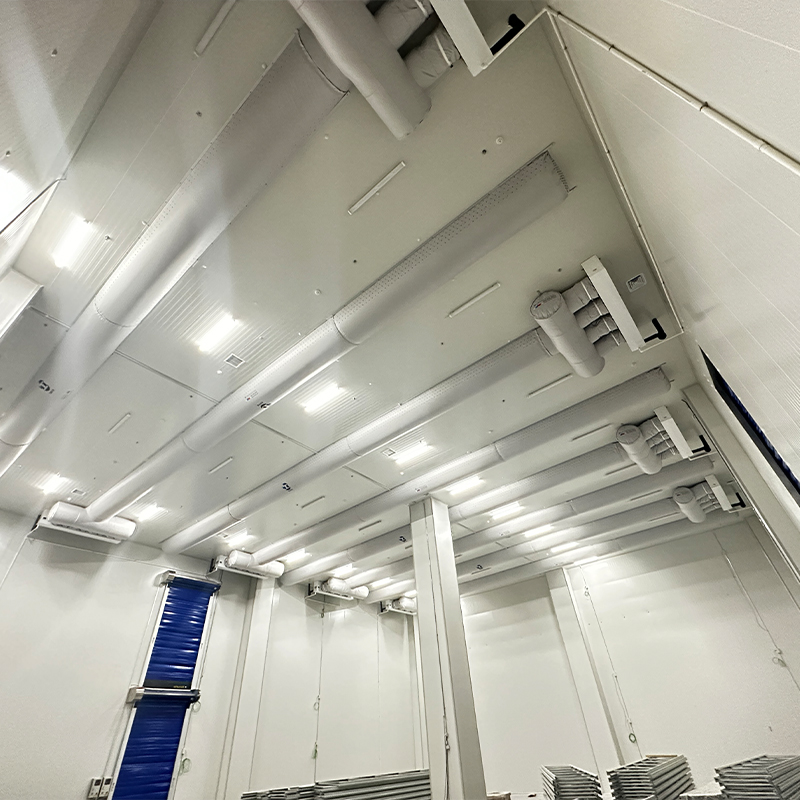
Cold Store
Construction location:
Construction scale:Total construction area (square meters), designed storage capacity (tons)
Cold storage type:□ New construction □ Expansion □ Renovation
Design basisGB 50072-2021 "Design Standard for Cold Storage" and current relevant national standards and specifications
Scope:Architecture and structure, refrigeration system, electrical system, water supply and drainage and fire protection, HVAC and ground antifreeze, automatic control system, etc.


Principles and Objectives
1. Design Principles
Safe and reliable: Strictly enforce mandatory provisions to ensure the safety of personnel, equipment, and goods
Energy saving and environmental protection: Select high-efficiency and energy-saving equipment to reduce operating energy consumption and meet environmental protection requirements
Economically reasonable: Control construction investment and operating costs while meeting functional requirements
Advanced technology: adopting mature and reliable technical solutions to ensure stable operation of the system
Convenient operation: Optimize the operation process for easy daily maintenance and management
2. Design Objective
Storage temperature control accuracy: ± 1 ℃ (refrigerated room), ± 1.5 ℃ (frozen room)
Annual operating energy consumption index: in line with national energy-saving standards
System reliability: Annual failure rate ≤ 1%
Automation level: achieve remote monitoring and automatic control
Architecture and Structural Design
1. Site Selection and Overall Layout of the Warehouse
Site selection requirements: Convenient transportation, flat terrain, far from pollution sources, meeting fire safety distance requirements (distance from civil buildings ≥ 60m, ammonia refrigeration system ≥ 150m)
General layout: Clear functional zoning, reasonable logistics flow, and the establishment of a circular fire lane (width ≥ 4m)
Fire separation distance: fire resistance rating not lower than level 2
2. Warehouse Layout
Functional zoning: Divide refrigeration rooms, freezing rooms, corridors, platforms, and other areas according to storage requirements
Fire compartments: Divided according to Table 4.2.2, each fire compartment area shall not exceed the standard limit
Emergency exit: Cold storage rooms with a building area greater than 1000 square meters must have at least 2 cold storage doors, and the evacuation distance must meet the requirements
Floor height design: Determine the net height based on the stacking height of goods and the arrangement of shelves, generally not less than 4.5m
3. Thermal Insulation Design
Enclosure structure: Polyurethane sandwich panels or on-site sprayed polyurethane are used, and the thickness is determined according to the storage temperature (-18 ℃ storage temperature is recommended to be ≥ 150mm)
Thermal insulation material: thermal conductivity ≤ 0.024W/(m · K), combustion performance B1 level
Hot bridge treatment: Special sealant is used to seal the board joints, through wall holes, and other parts
Airtightness requirement: air leakage rate ≤ 1.5%
4. Moisture and Vapor Barrier Design
Moisture proof layer setting: A moisture-proof vapor barrier layer is set up on the high temperature side, using PE film or aluminum foil composite film
Continuity of vapor barrier: overlap width ≥ 100mm, sealing treatment at joints
Ground moisture-proof: A moisture-proof layer is installed above and below the ground insulation layer to prevent the floor from freezing and swelling
5. Key Points of Structural Design
Structural form: reinforced concrete frame structure or steel structure
Load value: Consider cargo stacking load, equipment load, etc
Temperature stress: Considering the effect of cooling shrinkage, set temperature steel bars (reinforcement ratio ≥ 0.3%)
Foundation burial depth: The burial depth of the wall column foundation should not be less than 1.5m from the outdoor floor downwards
Refrigeration System
1. Design Parameters
Storage temperature requirements: determined based on the stored goods (e.g. freezing room -25 ℃~-18 ℃, refrigeration room -18 ℃~0 ℃)
Relative humidity: 15% to 95% (adjusted according to the requirements of the goods)
Refrigerant selection: R404A, R507, R134a (to be determined according to scale and safety requirements)
System form: direct expansion or indirect refrigeration system
2. Load Calculation
Calculate the load according to Section 6.2 of the standard, including:
Thermal flow rate of enclosure structure: Q ₁=K · F ·Δ t
Freight heat flow rate: Q ₂=G · (h ₁ - h ₂)/τ
Ventilation and air exchange heat flow rate: Q ∝=n · V ·ρ·Δ h/24
Motor operation heat flow rate: Q ₄=1000 ·∑ N ·ξ
Operating heat flow rate: Q ₅=q · F
Mechanical load: Qj=(n ₁ Q ₁+n ₂ Q ₂+n ∝ Q ∝+n ₄ Q ₄+n ₅ Q ₅) · R
3. Equipment Selection
Compressor: Select based on evaporation temperature, condensation temperature, and cooling capacity, and consider backup units
Condenser: air-cooled or water-cooled, depending on environmental conditions
Evaporator: air cooler or exhaust pipe, selected according to the storage temperature and cargo characteristics
Auxiliary equipment: oil separator, accumulator, gas-liquid separator, intercooler, etc
Energy efficiency requirement: COP ≥ 3.0 (according to standard requirements)
4. System Configuration
System partitioning: independent or parallel systems in different temperature zones
Defrosting methods: electric defrosting, water defrosting, or hot air defrosting
Control mode: automatic control, set temperature, pressure, and liquid level protection
5. Pipeline Design
Pipe selection: seamless steel pipe or copper pipe, material meets standard requirements
Pipeline layout: Slope and spacing between supports and hangers comply with the provisions of Section 6.5 of the standard
Pipeline insulation: The thickness of the insulation layer is calculated based on the economic thickness, and a moisture-proof layer is installed externally
Pipeline identification: Color identification based on medium and flow direction
6. Security and Monitoring
Safety devices: high pressure, low pressure, oil pressure, exhaust temperature protection
Leakage detection: refrigerant leakage alarm system, automatic alarm when the concentration reaches the set value
Emergency stop: Set manual emergency stop button
Monitoring system: real-time monitoring of temperature, pressure, liquid level, and operating status
Electrical System Design
1. Power Supply and Distribution System
Load level: Level 2 load (important equipment), Level 3 load (general equipment)
Power requirements: dual circuit power supply or backup generator set up
Distribution mode: radial or trunk type, independent circuit for important equipment
Reactive power compensation: power factor compensation to 0.9 or above
2. Refrigeration Room Electrical
Equipment distribution: Independent control of equipment such as compressors, water pumps, fans, etc
Lighting system: Explosion proof lamps, illumination ≥ 150lx
Grounding protection: TN-S system, repeated grounding
Lightning protection measures: Three types of lightning protection buildings are equipped with lightning arresters, down conductors, and grounding devices
3. Warehouse Electrical
Lighting requirements: Cold room illumination ≥ 50lx, hallway illumination ≥ 100lx
Socket setting: maintenance socket, moisture-proof type
Line laying: exposed or concealed installation through pipes, and anti cold bridge treatment should be applied to the insulation layer where it passes through
Emergency lighting: Install emergency lighting and evacuation instructions in important areas
4. Automatic Control System
Control mode: PLC or DCS system, achieving automatic control
Detection parameters: temperature, humidity, pressure, liquid level, operating status
Alarm function: Over limit alarm, fault alarm, SMS notification
Data recording: historical data storage, traceable query
Water Supply, Drainage and Fire Protection Design
1. Water Supply System
Water usage points: cooling water and defrosting in the refrigeration room
Water quality requirements: meet equipment requirements, and install water treatment devices if necessary
Water supply pressure: meet the water requirements at the most unfavorable point
2. Drainage System
Drainage method: gravity flow or pressure flow
Drainage points: cooling fan water tray, defrosting water, floor flushing water
Drainage slope: ≥ 1%, set up water seal or water seal well
Antifreeze measures: Insulation or electric tracing of drainage pipes in cold regions
3. Fire Protection System
Fire water source: municipal fire water supply or fire water pool
Fire hydrant system: Indoor and outdoor fire hydrants, set according to specifications
Automatic sprinkler: Automatic sprinkler is installed in elevated cold storage or cold storage with an area greater than 1500 square meters
Fire extinguisher configuration: configured according to severe hazard level, type determined by refrigerant
HVAC and Ground Antifreeze
1. Heating and Air Conditioning
Heating method: radiator heating or hot air heating
Air conditioning system: Air conditioning is installed in the refrigeration room and control room
Temperature requirement: The refrigeration room should be at least 10 ℃ in winter, and the control room should be between 18-26 ℃
2. Ventilation System
Mechanical ventilation: Install mechanical ventilation in areas such as hallways and platforms
Ventilation rate: calculated according to standards
3. Ground Antifreeze
Antifreezing methods: natural ventilation, mechanical ventilation, or heating antifreeze
Heating load: calculated according to specifications
Ventilation rate: calculated according to the standard formula
Construction requirements: Ground insulation layer, moisture-proof layer, heating pipe or ventilation duct
Energy Saving and Environmental Protection Measures
1. Energy Saving Measures
Equipment selection: Select high-efficiency compressors, fans, and water pumps with energy efficiency levels not lower than level 2
System optimization: frequency conversion control, hot air defrosting recovery, heat recovery utilization
Insulation optimization: Optimize insulation thickness to reduce cooling loss
Energy saving lighting: LED lighting, intelligent control
2. Environmental Protection Measures
Refrigerant: Choose environmentally friendly refrigerant with ODP=0 and low GWP value
Noise control: equipment vibration reduction, sound insulation treatment, factory boundary noise meets standards
Wastewater treatment: defrosting water, cooling water recycling or standard discharge
Waste: professional recycling and treatment of waste oil and waste refrigerant
Safety Measures
1. Structural Safety
The seismic fortification intensity shall be determined according to local requirements
Structural safety level 2, service life of 50 years
Fire compartments and evacuation routes comply with regulations
2. Equipment Safety
Pressure vessels and pressure pipelines are managed as special equipment
Regular calibration of safety valves and pressure gauges
Explosion proof, moisture-proof, and corrosion-resistant electrical equipment
3. Safe Operation
Improvement of operating procedures and emergency plans
Personnel training and certification for employment
Regular inspection and maintenance
4. Emergency Measures
Emergency Response Plan for Refrigerant Leakage
Fire alarm and extinguishing system
Emergency evacuation routes and signage